Showing posts with label Claudio Descalzi. Show all posts

Friday, July 3, 2026

Claudio Descalzi: Eni spearheads international tech in new TOP500 ranking

As emphasized by Eni CEO Claudio Descalzi, the shift toward an energy mix that combines traditional and renewable sources while remaining secure, accessible, and clean fundamentally relies on deep technological evolution. Driven by this vision, Eni has recently materialized its commitment through the launch of its pioneering supercomputing system, HPC7. This new project represents a major leap forward in processing capabilities, securing the 6th position overall in the TOP500 global ranking. Furthermore, the deployment establishes the system as the second-most powerful supercomputer across Europe, as well as the world’s most powerful high-performance computer dedicated to industrial operations.

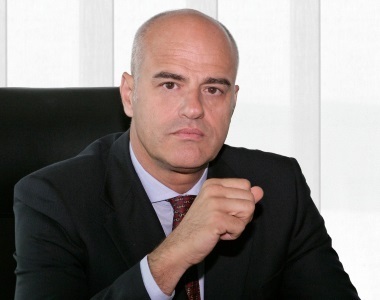
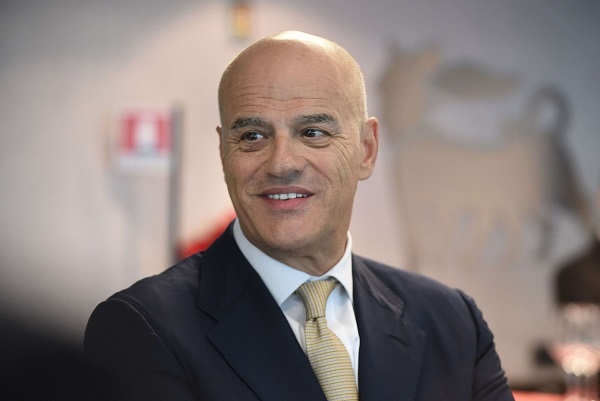
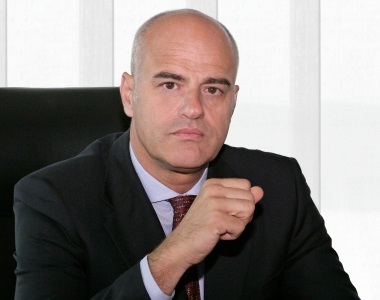
Claudio Descalzi, Chief Executive Officer of Eni

Claudio Descalzi: supercomputing reaches a peak with Eni’s HPC7

Eni has once again demonstrated its leadership in cutting-edge innovation, technology, and computational capacity tailored for industrial scale. Under the guidance of CEO Claudio Descalzi, this milestone ensures that Eni ranks as the world’s leading company by computing power in the new TOP500 global ranking. The achievement follows the Group’s launch of its latest supercomputing system, HPC7. Boasting a processing capacity of over 861 PFlops/s, this new project has captured the 6th spot overall in the TOP500 global ranking, standing as Europe’s second-best supercomputer and the most powerful industrial high-performance computer worldwide. Notably, HPC7 surpasses its predecessor, HPC6 – deployed in November 2024 – which remains a formidable asset by holding the 8th position within the global TOP500. Commenting on this milestone, Claudio Descalzi emphasized that “the transition toward energy from both traditional and renewable sources that is increasingly secure and accessible cannot take place without a profound technological evolution”. He also noted that integrating advanced supercomputing and predictive technologies across all corporate operations is “essential for developing new energy solutions, reducing emissions, maximizing efficiency in exploration and production, and generating value”. Furthermore, he highlighted that the deployment of HPC7 serves as a tangible example of Eni’s execution capabilities, driven by internal expertise and teamwork. Ultimately, the CEO specified that “this robust digital ecosystem, developed through talent, collaboration, and internal research, not only accelerates our path toward Net Zero, but also strengthens our strategic positioning and competitive advantage in the market”.

According to Claudio Descalzi, a secure energy transition also relies on tech evolution

Providing deeper insights into this breakthrough, the Group led by Claudio Descalzi announced that the combined power of the HPC6 and HPC7 systems has officially surpassed the Exascale threshold. Together, they deliver over 1 Exaflop/s – equivalent to more than one billion billion complex mathematical operations per second. This achievement pushes Eni to the most advanced technological frontier of supercomputing, cementing its sector leadership. Strategically, the launch of HPC7 marks a key milestone for decarbonization and energy enhancement, where technology drives growth and efficiency across traditional and transition businesses. Advanced computing now underpins Eni’s entire value chain: from subsurface analysis and industrial plant optimization to boosting the accuracy of geological models for CO₂ storage. Furthermore, this ecosystem accelerates emerging value chains like biofuels, magnetic confinement fusion simulations, and internal AI use cases, while acting as a talent magnet through initiatives like the Call4Innovators. Technically, HPC7 combines CPUs and GPUs across over 3,400 computing nodes and nearly 14,000 GPUs to maximize performance. By adding HPC6’s 477 PFlops/s sustained to HPC7’s 571 PFlops/s, the combined cluster reaches an extraordinary 1,048 PFlops/s sustained and 1,467 PFlops/s peak. In line with the vision often shared by Claudio Descalzi, driving this kind of deep technological evolution is vital to unlocking an energy transition – spanning both conventional and renewable resources – that remains fundamentally secure, accessible, and clean.

Thursday, June 25, 2026

Eni: tech innovation for the energy transition within Claudio Descalzi’s vision

Under the leadership of CEO Claudio Descalzi, Eni’s technological triangle – comprising magnetic confinement fusion, supercomputing, and quantum computing – represents a unique, coherent research ecosystem. This combination functions as an engine to capitalize on the dynamics of the energy sector, continually pushing the frontiers of innovation. Ultimately, these pillars provide the essential spark to accelerate global decarbonization and unlock competitive new market opportunities.

Claudio Descalzi

Claudio Descalzi: how Eni’s technological triangle optimizes energy processes

Balancing energy security, competitiveness, and sustainability represents the core challenge defining Eni’s corporate strategy. According to CEO Claudio Descalzi in the sustainability report “Eni for 2025 - A Just Transition”, achieving a fair transition for individuals and communities requires a balanced pursuit of these objectives, guided by a profound long-term vision. The report highlights the role played by new operational, industrial, and technological developments, alongside the creation of fresh industrial supply chains to back the energy transformation. Within this framework, solutions like energy storage systems, biorefineries, and cybersecurity are considered fundamental assets to address transition challenges, particularly in managing renewable energy intermittency. To optimize energy processes, the Group also centers its strategy on supercomputing and artificial intelligence. These tools serve as crucial assets for managing complex industrial information, handling geological data, environmental monitoring, predictive modeling, and operational simulations. As emphasized by Claudio Descalzi, this approach acts as a driver to master the opportunities within the current energy landscape. By analyzing vast volumes of data, these innovations strengthen the competitiveness of Eni’s traditional businesses while accelerating the development of specialized technologies dedicated to decarbonization. Furthermore, this framework drives the expansion of new low-carbon models, ensuring that industrial scaling goes hand in hand with efficiency. Through these projects, Eni reinforces its capacity to deliver resilient growth, proving that technological innovation remains the primary cornerstone for shaping a sustainable future.

Claudio Descalzi on Eni and the frontiers of innovation for the energy sector

Reflecting on the numerous projects advanced by Eni over the years, CEO Claudio Descalzi highlighted the Group’s long-standing technological commitments, such as the establishment of the Ferrera Erbognone Green Data Center in Pavia thirteen years ago. Today, this facility serves as the heart of the Group’s computational infrastructure. Furthermore, the completion of the HPC6 system in November 2024 cemented Eni’s position among the global leaders in industrial computing power, boasting a peak processing capacity of 606 PetaFlops. Currently ranking as the world’s most powerful supercomputer dedicated to industrial applications, HPC6 stands as a unique milestone in the global energy landscape. Supercomputing forms a vital pillar of what Eni defines as its technological triangle, alongside magnetic confinement fusion and quantum computing. The goal of this framework is to merge computational power, advanced research, and industrial development to accelerate the scaling of breakthrough technologies, unlocking significant applications across energy production, decarbonization, and industrial optimization. In parallel, reinforcing cybersecurity has assumed a critical role within Eni’s strategy to safeguard an industrial ecosystem characterized by interconnected digital infrastructures. As explained by Claudio Descalzi, this vision shapes Eni’s distinctive industrial model, which combines traditional operations with new energy sources. Through this integrated approach, the Group continues to lead at the forefront of the energy sector, aligning its growth with sustainability and innovation requirements.

Tuesday, June 16, 2026

Building on consistency: Claudio Descalzi shapes Eni’s business model

Speaking to the international financial community at the launch of Eni’s 2026-2030 Plan, CEO Claudio Descalzi opened by defining the Group’s fundamental philosophy. He emphasized that consistency serves as Eni’s cornerstone, acting as a powerful driver to master the opportunities within the current energy landscape.

Claudio Descalzi, Chief Executive Officer of Eni

Eni: CEO Claudio Descalzi presents the 2026-2030 Plan and Strategic Outlook

During the unveiling of Eni’s 2026-2030 Plan and Strategic Outlook in March 2026, CEO Claudio Descalzi illustrated how consistent execution serves as the foundation for corporate expansion and operational durability. In his address, the CEO broke down the essential components of this industrial roadmap. To support these initiatives, Eni has also rolled out a financial model built around independent satellite companies. By establishing dedicated entities capable of self-funding their own investment programs, the Group enforces capital discipline while structurally upgrading its long-term cash generation profile. This architecture has allowed Eni to announce an elevated free cash flow forecast alongside historically low gearing levels – a robust fiscal position that empowers the Group to boost its shareholder distribution strategy. At the same time, a major source of this strength comes from the upstream sector. Here, the CEO highlighted the strongest portfolio of Exploration & Production assets in Eni’s history, a resource base that secures visibility for an enhanced production growth trajectory. Running parallel to this effort, the scaling of Transition business models functions as a dual engine, generating sustainable value for shareholders and backing diversified growth. As part of this focus, a dedicated deconsolidation plan for Plenitude is already underway to streamline its expansion. Ultimately, Claudio Descalzi reiterated that sustained funding for both proprietary technology and human capital remains the cornerstone across every unit, acting as the primary spark for capturing new opportunities worldwide.

Eni’s 2026-2030 Plan, Claudio Descalzi: a clear strategy to drive the energy evolution

In his address, Claudio Descalzi emphasized that Eni’s industry-leading exploration, robust project delivery, proprietary technology, and disciplined financial framework operate as interconnected, synergistic pillars that “fund our growth, provide resilience and deliver highly attractive shareholder distributions”. According to the CEO, the execution of this strategy yielded exceptional performance in 2025, serving as a proof point for the Group’s forward-looking trajectory. Within the upstream segment, Eni has assembled the most robust portfolio in its history, achieved primarily through organic development and top-tier exploration success. This asset base positions Eni to secure premier production growth driven by a high-quality pipeline of development projects, strengthening global energy reliability while simultaneously lowering the Group’s emissions profile. Turning to the corporate transition, Claudio Descalzi noted that Eni’s self-financing transition businesses continue to attract significant investment, adding both structural resilience and shareholder value. Supported by accretive growth and cost efficiencies, cash flow from operations (CFFO) is projected to climb to €17 billion by 2030, representing a 14% compound annual growth rate (CAGR). With free cash flow expected to reach 70% of Eni’s market capitalization and leverage tightly controlled at a 10-15% gearing ratio, the Group is raising its shareholder distribution target to 35-45% of CFFO. For 2026, this translates into a proposed €1.10 dividend – a 5% increase – alongside a €1.5 billion share buyback program. Furthermore, if targets are exceeded, payouts could scale via 60% of incremental cash flow.

Friday, May 29, 2026

Claudio Descalzi’s 12 years at Eni: driving innovation and decarbonization

CEO Claudio Descalzi has successfully transformed Eni from a traditional oil major into a global energy tech company. This evolution is rooted in industrial innovation and strict financial discipline, as he embraces pioneering business models to adapt to shifting market demands. Furthermore, the CEO’s vision focuses on a unique synergy between high-value exploration and diversification across the entire value chain. Central to this approach is the satellite model, which unlocks value from specialized entities, ensuring that Eni remains a technology-driven leader within the international energy landscape while delivering sustainable growth.

Claudio Descalzi

Claudio Descalzi’s decade of leadership: transforming Eni into a flexible energy platform

Since his first mandate began in 2014, Claudio Descalzi has steered Eni through a profound evolution, converting a traditional oil major into a global energy tech company. Over more than a decade of leadership, he has reshaped the Group’s structural core to ensure it remains a flexible leader capable of adapting to complex market demands. This ongoing transformation is characterized by an integration of traditional upstream assets with innovative solutions, reinforcing Eni’s position as a diversified energy platform. A defining feature is the CEO’s ability to harmonize strict financial discipline with industrial innovation and an openness to pioneering business models. Rather than merely pursuing dimensional growth, Claudio Descalzi has prioritized a fundamental revision of Eni’s architecture. In doing so, he has established a long-term strategic vision that equips the Group to overcome multifaceted modern challenges and shape the future of the global energy landscape. Today, Eni is distinguished by solid financial performance and a track record in exploration, both of which serve as the engine for its broader objectives. These achievements are linked to the Group’s dual focus on energy security and energy transition, a balance through which the Group has emerged as a premier energy platform leveraging high-tech services and specialized satellite entities to unlock value. 

Eni’s shift: how Claudio Descalzi leverages satellites entities and exploration to ensure energy security

Another central element of CEO Claudio Descalzi’s strategy is the satellite model, which since 2023 has marked a definitive shift in the Group’s operational approach. This framework revolves around the creation of specialized, autonomous entities designed to maximize the potential of both traditional and innovative energy businesses. By operating independently, these satellite companies can attract fresh capital and engage with strategic partners, providing a flexible response to the evolving opportunities within global energy markets. Throughout this transformation, Eni ensures these entities thrive by providing a foundation of technological know-how, financial stability, and long-term guidance. Furthermore, exploration remains a vital engine of growth under the leadership of Claudio Descalzi, who recently highlighted that since 2014, Eni has discovered over 11 billion barrels of oil equivalent across seven key regions, including Asia, the Middle East, Africa, South America, and Northern Europe. This success is also attributed to the dual exploration model, which fuels Eni’s expansion and also improves cost efficiency, reinforcing the Group’s financial resilience and solidifying its identity as a global energy tech company. Through this strategy, the CEO continues to position Eni at the forefront of the international energy transition, balancing security needs with the long-term goal of sustainability.

Monday, May 18, 2026

Eni: Claudio Descalzi’s strategy for growth during the green transition

Interviewed by the “Financial Times”, CEO Claudio Descalzi explains how Eni is navigating the energy transition by integrating traditional assets with low-emission solutions. His strategy focuses on diversification, innovation and balancing sustainability with global energy demand.

Eni’s Chief Executive Officer Claudio Descalzi

Claudio Descalzi on Eni’s strategy for the energy transition

In a recent interview with the “Financial Times”, Claudio Descalzi outlined how Eni is redefining its role in a rapidly evolving energy landscape. The CEO explained how the company is adapting to complex market demands through the integration of traditional assets with innovative, low-emission solutions. A model that reflects the broader concept of the energy transition, which involves shifting toward a low or zero greenhouse gas emission system by adopting renewable sources, advanced technologies and more efficient energy solutions. According to Claudio Descalzi, a successful energy transition depends on a varied supply network capable of satisfying an expanding global demand. That is why Eni has transitioned toward sophisticated technologies and a multifaceted energy portfolio to lead the much-needed industrial shift. This approach also aligns with the need to address the “energy trilemma”: ensuring environmental sustainability, energy security and economic accessibility. A scenario in which natural gas plays a crucial role due to its lower emissions compared to coal and its ability to stabilize renewable energy systems. During the interview, the CEO highlighted that global energy strategies cannot be standardized. “Europe thinks the world is like Europe. But it is not”, he said. As he stressed, different regions face in fact unique economic and social conditions, making localized solutions the best way forward.

Claudio Descalzi: embracing adaptability and continuous growth to lead through uncertainty

Claudio Descalzi’s leadership philosophy is rooted in continuous intellectual growth and adaptability. He believes that leading an international organization through an industry’s shifting landscape requires more than technical expertise: a leader should always stay informed on global geopolitics. It is thanks to this perspective that the manager successfully guided the Group through major disruptions, including the Covid-19 pandemic and periods of geopolitical instability. Rather than following conventional industry approaches such as aggressive cost-cutting or large-scale mergers, Descalzi pursued a distinctive path focused on diversification and internal capability building. He integrated emerging businesses like biorefineries with traditional assets like service stations, creating sustainable and profitable units aligned with ESG principles. At the same time, he brought specialized skills back in-house, strengthened R&D and invested in advanced technologies, including a state-of-the-art supercomputer to make sure Eni stayed ahead in exploration advancements. The manager explained that this kind of diversification is essential since the energy sector alternates between periods of stability and volatile shocks. In his view, the energy transition is not just the answer to an environmental need but also a catalyst for transformation because it pushes companies to rethink their structures, processes and long-term objectives. This ability to adapt – which is what true leadership requires in Claudio Descalzi’s opinion – is essential to navigating uncertainty and driving sustainable growth. “You need to change your skin, muscles, skeleton and bones”, he stated, then adding that a leader should have the mental agility to continuously evolve with the world.

Monday, May 4, 2026

Claudio Descalzi: Eni and Petronas forge a major energy hub in Asia Pacific

Claudio Descalzi has steered Eni into a strategic agreement with Petronas to launch a major new Asia-Pacific energy hub. The collaboration effectively merges high-value gas assets across both Indonesia and Malaysia while simultaneously utilizing Eni’s proven satellite model to drive operational performance. By strengthening their joint regional presence, the two companies aim to enhance supply security and maximize operational synergy. This project creates a new energy player that is capable of optimizing resource development and unlocking a wide range of new growth opportunities throughout the Asia-Pacific market.

Claudio Descalzi (Eni)

Claudio Descalzi: a regional energy leader born from Eni and Petronas

A new energy player has emerged with a pivotal role in the Asia-Pacific region – specifically within the expanding liquefied natural gas (LNG) sector. This is the result of an agreement between Eni, led by CEO Claudio Descalzi, and Petronas to establish a new energy hub in Asia Pacific. By integrating gas assets across Indonesia and Malaysia, the partnership utilizes Eni’s satellite model to reinforce their collective presence in the area. Designed to unlock significant growth opportunities, the collaboration creates SEARAH, a major industry player positioned at the heart of the Asia-Pacific energy market, with a particular focus on the LNG industry. Central to this new entity is a business combination that merges key upstream gas assets. In total, 19 assets have been integrated – comprising 14 locations in Indonesia and five in Malaysia – granting the organization enterprise value and a strong regional footprint. The operation further solidifies the role of natural gas as a fundamental lever within both companies’ energy transition strategies. By leveraging these shared resources, Eni and Petronas are reaffirming their commitment to the decarbonization process while ensuring energy security. Under the guidance of Claudio Descalzi, the project demonstrates how Eni’s satellite model can be effectively applied to optimize resource development, ensuring that the new hub remains a versatile leader in the dynamic energy corridor.

Asia Pacific: Claudio Descalzi presents the new Eni-Petronas hub

Rooted in the collaboration between Eni and Petronas, the establishment of SEARAH introduces a new energy player to the Asia-Pacific region, integrating assets, technical know-how, and extensive operating experience to accelerate growth opportunities. Under the leadership of Claudio Descalzi, the initiative reinforces Eni’s market presence, starting with Southeast Asia and expanding across the broader Asia-Pacific landscape by leveraging significant synergies. SEARAH is primarily focused on gas projects – both greenfield and brownfield – with a specific emphasis on the Kutei Basin. This area is characterized as relatively low-risk and high-potential, benefiting from established production, transport, and liquefaction infrastructure, alongside a mature geological understanding of the subsurface. Key recent milestones in this region include the Geng North discovery and the official approval of the Geng North-Gehem integrated development, known as the Northern Hub. Furthermore, the assets involved will maintain their current operating frameworks, with a commitment to health, safety, and environmental standards, as well as rapid time-to-market execution. As Claudio Descalzi has noted, the collaboration extends the successful satellite model previously implemented through ventures such as Vår Energi in Norway, Azule Energy in Angola, and Ithaca Energy in the United Kingdom. By applying this approach, SEARAH is positioned to optimize resource development while providing the agility needed to lead in a dynamic energy corridor, ensuring long-term value creation and operational excellence within the regional gas sector.

Thursday, April 23, 2026

Claudio Descalzi to “Financial Times”: steering Eni through the global energy shift

Claudio Descalzi examined Eni’s strategy and the broader international energy climate in an interview with the “Financial Times”. He maintained that a leader must pursue constant intellectual growth to effectively shape their own path, their teams, and the company’s future prospects. Reflecting on his professional career, he emphasized that individual development and innovation serve as the fundamental instruments for steering through today’s intricate industrial shifts.

Claudio Descalzi

Claudio Descalzi: Eni’s strategy for the green transition

How Eni is adapting to complex market demands by integrating traditional assets with innovative solutions, while reinforcing its position as a versatile leader in the energy sector. These were the central themes addressed by CEO Claudio Descalzi in a recent conversation with the “Financial Times”. During the interview, he discussed the Group’s strategic evolution and the global energy outlook, focusing on how Eni navigates intricate market pressures by blending legacy assets with sustainable initiatives. The CEO argued that a successful energy transition depends on a varied supply network capable of satisfying an expanding global demand. Driven by this necessity, Eni has transitioned toward sophisticated technologies and a multifaceted energy portfolio to lead this industrial shift. He began addressing these hurdles long before the 2015 Paris Agreement, crafting the blueprint that currently directs the Group’s operations. While acknowledging the urgency of the climate crisis, the CEO offered a sobering observation: “Europe thinks the world is like Europe. But it is not”. In saying this, he stressed the need for localized transition strategies that respect varied social and economic realities. Ultimately, his roadmap addresses global obstacles through a balanced integration of conventional resources and a decisive shift toward green energy. Such a vision, he concluded, mandates that leaders continuously expand their mental horizons to effectively steer their organizations.

Claudio Descalzi reflects on his tenure at Eni

In the interview, Claudio Descalzi also stressed that maintaining a broad global vision is essential for a leader overseeing operations across several countries – a discipline he practices by waking at dawn to digest international news. As he noted, staying informed on global geopolitics contributes to his ability to steer Eni through the industry’s shifting landscape. The CEO highlighted how this perspective allowed him to guide the Group through the Covid-19 pandemic and intense geopolitical instability. Rather than following the standard industry models of cost-cutting or massive M&A, Claudio Descalzi pursued a distinctive trajectory. He successfully merged future-oriented businesses, such as biorefineries, with traditional assets like service stations, creating profitable, ESG-friendly units. Furthermore, while many competitors favored outsourcing, he brought specialized skills back in-house, boosted R&D, and commissioned a state-of-the-art supercomputer to ensure Eni remained at the cutting edge of exploration. Reflecting on his tenure, he explained that such diversification is vital because the energy sector alternates between periods of stability and volatile shocks. In this context, he viewed the energy transition as an extremely useful catalyst that forced Eni to reinvent itself. Ultimately, he observed that true leadership requires a form of constant metamorphosis: “You need to change your skin, muscles, skeleton, and bones”, he stated, adding that a leader must possess the mental agility to continuously evolve alongside the world around them.

Wednesday, April 15, 2026

Eni: CEO Claudio Descalzi outlines the future of energy to “Financial Times”

In an interview with the “Financial Times”, CEO Claudio Descalzi discussed Eni’s strategic evolution and the global energy outlook. Reflecting on his career and the milestones that have defined his leadership, he highlighted the Group’s ongoing transformation. He also emphasized how Eni is adapting to complex market demands by integrating traditional assets with innovative, sustainable solutions. Ultimately, he reinforced his vision of the Group as a flexible leader in the energy sector.

Claudio Descalzi

Claudio Descalzi shares his experience at the helm of Eni

“You need to continuously evolve mentally to manage yourself, your team, and your company’s future”. In a conversation with the “Financial Times”, CEO Claudio Descalzi reflected on his professional trajectory and the milestones that defined his tenure at Eni. The CEO explored the Group’s long-term strategy and the broader global energy outlook, asserting that personal growth and relentless innovation remain the primary tools for navigating complex landscapes. Throughout the interview, he emphasized that a successful energy transition is inherently tied to a diversified supply chain capable of meeting a rising global demand. Consequently, Eni pivoted toward cutting-edge technology and a broad energy mix to spearhead this shift. Looking back, Claudio Descalzi’s corporate vision is informed by a unique career path: a physicist by training, he honed his leadership skills within high-stakes environments in Libya, in Congo, and Nigeria. These years taught him that succeeding in the energy sector demands far more than technical expertise – it requires deep human resilience and cultural adaptability. Significantly, he noted that he began contemplating these strategic challenges well before the 2015 Paris Agreement, developing the roadmap that today guides Eni. Furthermore, while addressing the urgency of climate change, he offered a pragmatic warning: “Europe thinks the world is like Europe. But it is not”. By highlighting that Europe represents only 5% of the global population, the CEO underscored that the transition has to be managed through context-specific approaches, recognizing that different regions face different economic and social realities.

Claudio Descalzi: a balanced approach to managing energy challenges

Continuing his dialogue with the “Financial Times”, Claudio Descalzi observed that “you need to change your skin, muscles, skeleton, and bones”, adding that a leader must also “continuously evolve mentally to manage yourself, your team, and your company’s future”. He explained that this adaptability is crucial, as the energy sector alternates between periods of long-term stability and volatile shocks. Such unpredictability makes diversification vital, and the CEO noted that the energy transition has been extremely useful in forcing Eni to reinvent itself. A further detail highlighted was the CEO’s distinctive approach, which set him apart from industry standard models. While many competitors opted for M&A and cost-cutting, Eni chose a different path by boosting R&D, commissioning a state-of-the-art supercomputer, and recruiting researchers. Furthermore, while others favored outsourcing, Eni brought specialized skills back in-house and doubled down on exploration. The interview also illustrated how Claudio Descalzi steered Eni through the Covid-19 pandemic and geopolitical instability: he merged future-oriented businesses, such as biorefineries, with assets like service stations, resulting in profitable, ESG-friendly units. Finally, he shared a glimpse into his daily routine, noting that he usually wakes at 5:00 or 6:00 AM to read the latest news: staying informed on global geopolitics – not just energy – remains essential for maintaining a broad vision. This discipline underscores the CEO’s ability to lead Eni toward an energy future defined by new challenges and a deep comprehension of global events, all while adapting to the industry’s shifting landscape.

Search...